The short answer
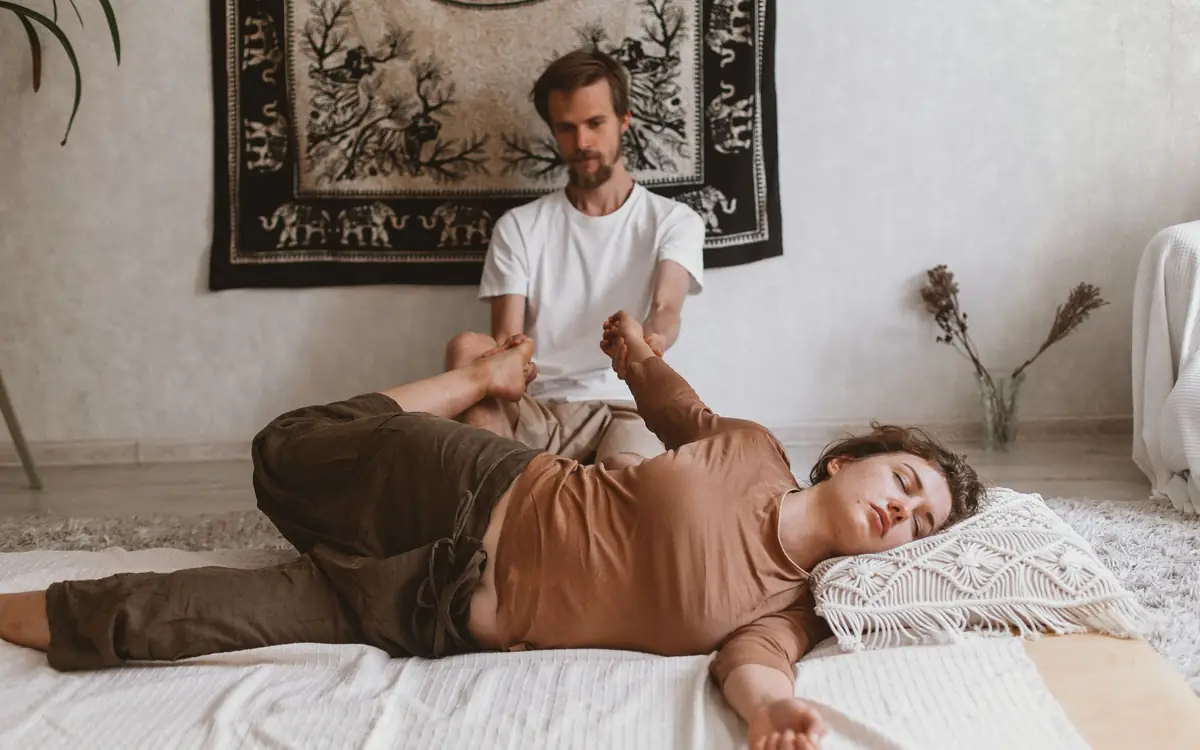
In a classic Thai massage the therapist moves you through stretches and presses along your body, with you fully clothed, often on a mat on the floor. It feels more active than Taiwanese acupressure. A "Thai oil massage" on some menus is a different thing: an oil massage, usually on a bed. Tell the therapist about stiff joints and how far you can stretch.
- In Chinese
- 泰式按摩, 泰式古法按摩. Thai oil massage: 泰式精油按摩.
- Body areas
- Whole body, with stretches for hips, legs, back and arms.
- Clothing
- Loose clothes, usually provided.
- Oil
- None in classic Thai massage.
- Setting
- A mat on the floor or a wide bed.
- Pressure
- Medium to firm, with stretching.
- Booking
- Booking ahead is wise: fewer shops offer it.
Thai or Taiwanese?
Both are clothed and both can be firm. Taiwanese acupressure stays mostly with pressing and kneading while you lie still. Thai massage adds stretching: the therapist may pull, rock and fold you. If you have hip, knee or back problems, or have had joint surgery, say so first, or choose acupressure.
What to say
- 不要拉太用力。
Please don't stretch me too hard. - 我的膝蓋不太好。
My knees are not good. - 可以輕一點嗎?
Could you use less pressure?
All phrase cards, shown large for the therapist
When to skip it or ask a doctor first
there have been rare reports of serious side effects, such as a blood clot, nerve injury, or bone fracture, and it suggests asking a health care provider if you are not sure massage is right for you. Relax.tw makes no health claims. Also our general guidance, for stretching in particular: skip it after joint surgery or with joint replacements unless your doctor agrees.
What it costs (listed prices we checked)
We have not checked a menu that lists this yet.
Facts on this page checked 9 November 2026. Prices and policies change: confirm with the business.